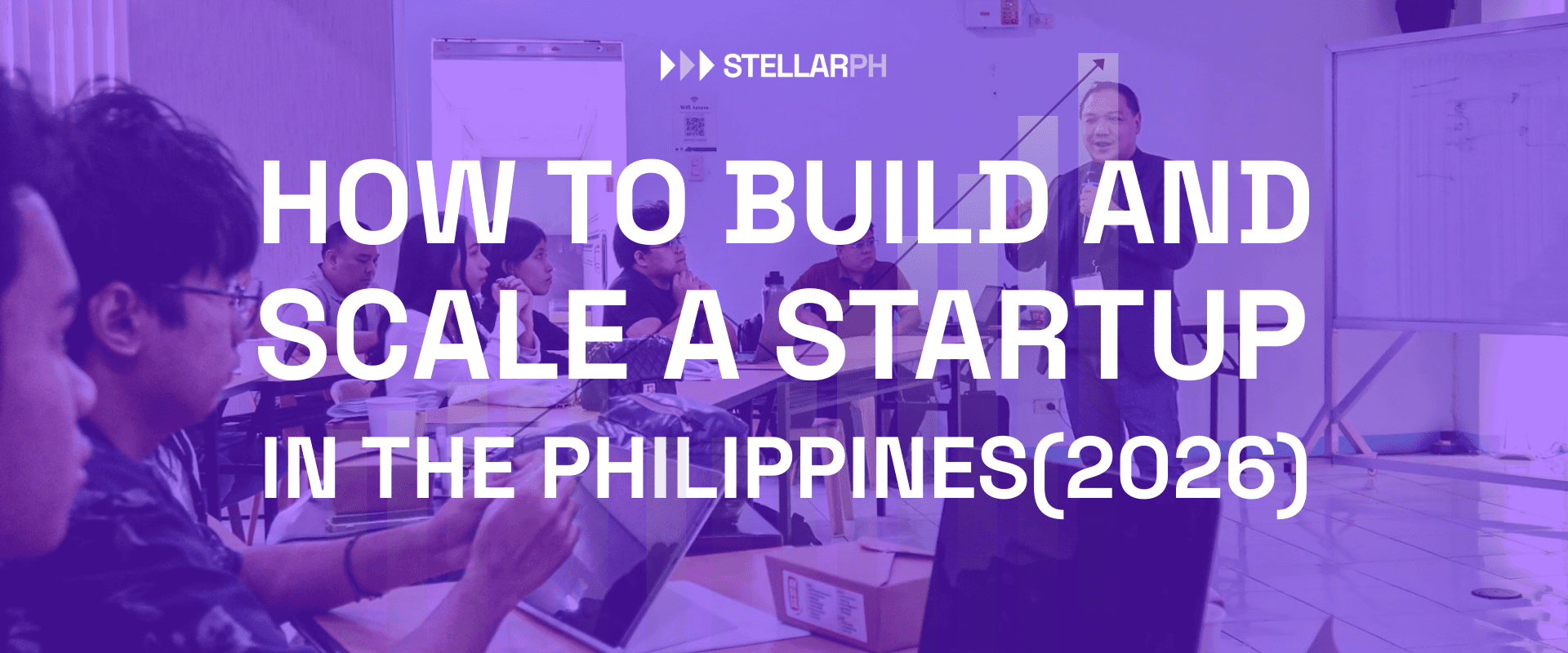
How to build and scale a startup in the Philippines in 2026
Building a startup in the Philippines in 2026 can feel confusing. There is more movement than ever. There are more events, more programs, and more people calling themselves founders. The startup community in the Philippines keeps growing, and the digital economy growth leading into 2026 is difficult to ignore.
And yet, many startups still do not make it past the early stages.
It is rarely about ideas or talent.
More often, it is about structure, timing, and how risk is handled early on.
This is not a hype article or a checklist. It is a grounded look at what actually matters when you are trying to build - and eventually scale - a startup in the Philippine tech landscape.
The evolving startup ecosystem in the Philippines
The Philippine startup ecosystem has changed significantly over the past few years. Innovation hubs are no longer limited to Metro Manila. Cebu, Davao, Iloilo, and other regions are building momentum of their own. Founder-led communities are stronger, and collaboration is easier than it used to be.
From the outside, things appear to be moving fast.
But underneath, many startups are still facing the same challenge: turning early excitement into real execution. Digital economy growth creates opportunity, but it also exposes gaps. Building something real takes longer than most founders expect.
That is why understanding the ecosystem matters. Not just knowing who exists, but knowing who does what, and at which stage. This is precisely why having a clear startup ecosystem map helps. It allows founders to orient themselves instead of operating in isolation.
https://stellarph.io/ecosystem
The ecosystem has become good at launching startups.
Not all startups have become good at lasting.
Finding the Right Startup Enablers in the Philippines
At some point, founders start looking for support. In the Philippines, there is no shortage of startup enablers.
There are government startup grants and programs tied to DTI startup support and the DICT Innovative Startup Act. Universities, private organizations, and communities offer incubators, accelerators, and workshops.
The challenge is not access.
It is choosing the right kind of support at the right moment.
This is where the difference between a startup incubator versus accelerator in the Philippines becomes important.
Incubators usually focus on ideas, exploration, and early validation. Accelerators focus on execution, systems, discipline, and readiness for growth. Neither is better by default. They simply serve different stages.
Choosing an accelerator too early can overwhelm a team. Staying too long in ideation can slow momentum. Timing matters more than labels.
Why a startup accelerator in the Philippines makes sense in 2026
One insight that continues to surface in conversations with experienced ecosystem builders, including what Joseph De Leon from MAIN often emphasizes, is simple:
Bootstrap until you cannot.
The longer you stay with the problem, the more problems you solve. And the more problems you solve, the safer your investment becomes. You remove assumptions, gain clarity, and reduce risk before bringing others in.
In the Philippine context, this matters greatly. Seed funding for Filipino startups and venture capital in the Philippines exist, but they are careful. Investors want to see that founders have already done the hard work themselves.
A startup accelerator in the Philippines helps founders extend that bootstrapping phase in a structured way. Not by slowing growth, but by focusing effort on what actually matters: operations, financial clarity, decision-making, and investor-ready pitch decks that reflect reality.
Startup mentorship in this context is not about motivation.
It is about focus, discipline, and accountability.
Acceleration does not remove risk.
It makes risk intentional.
The role of startup education in the Philippines
Startup education in the Philippines is evolving. There is more focus now on technopreneurship training, startup workshops for students, and learning by building rather than learning by theory.
But education only works when it is connected to execution.
Founder mindset matters, especially early on. But mindset without structure leads to frustration. Effective startup education teaches founders how to work in stages, how to validate assumptions, solve real problems, and build confidence before scaling a business in Southeast Asia.
This is also why having a structured learning path matters. Not as a library of content, but as guidance through the realities of building step by step.
For students and early professionals, this kind of education creates clarity early. Not everyone needs to become a founder. But those who do should understand what the journey actually looks like.
Frequently asked Questions
Who is this article and the StellarPH programs for?
This article is for aspiring founders, early-stage teams, students, and professionals who want to build startups in the Philippines with a strong foundation before scaling.
Do I need to have an established startup already to join?
No. Many founders join at different stages. What matters most is clarity, commitment, and the willingness to execute.
What is the difference between a startup incubator and a startup accelerator in the Philippines?
Incubators focus on ideas and early validation. Accelerators focus on execution, readiness, and growth.
Is this open to students or only experienced professionals?
Both. Titles matter less than mindset. Students, first-time founders, and experienced professionals all start somewhere.
What kind of startup education does StellarPH provide?
Applied startup education focused on execution, mentorship, and real-world building, not just theory.
Are there government startup grants available through these enablers?
Yes. Several government startup grants are available through DTI, DICT, and accredited startup enablers. StellarPH is happy to guide.
One last thought
Building and scaling a startup in the Philippines is not about moving fast for the sake of it. It is about reducing risk before chasing growth.
As we move deeper into 2026, the startups that succeed will not be the loudest.
They will be the ones that stayed longer with the problem, solved more of it, and built on solid ground.
Released
Written by
StellarPH